
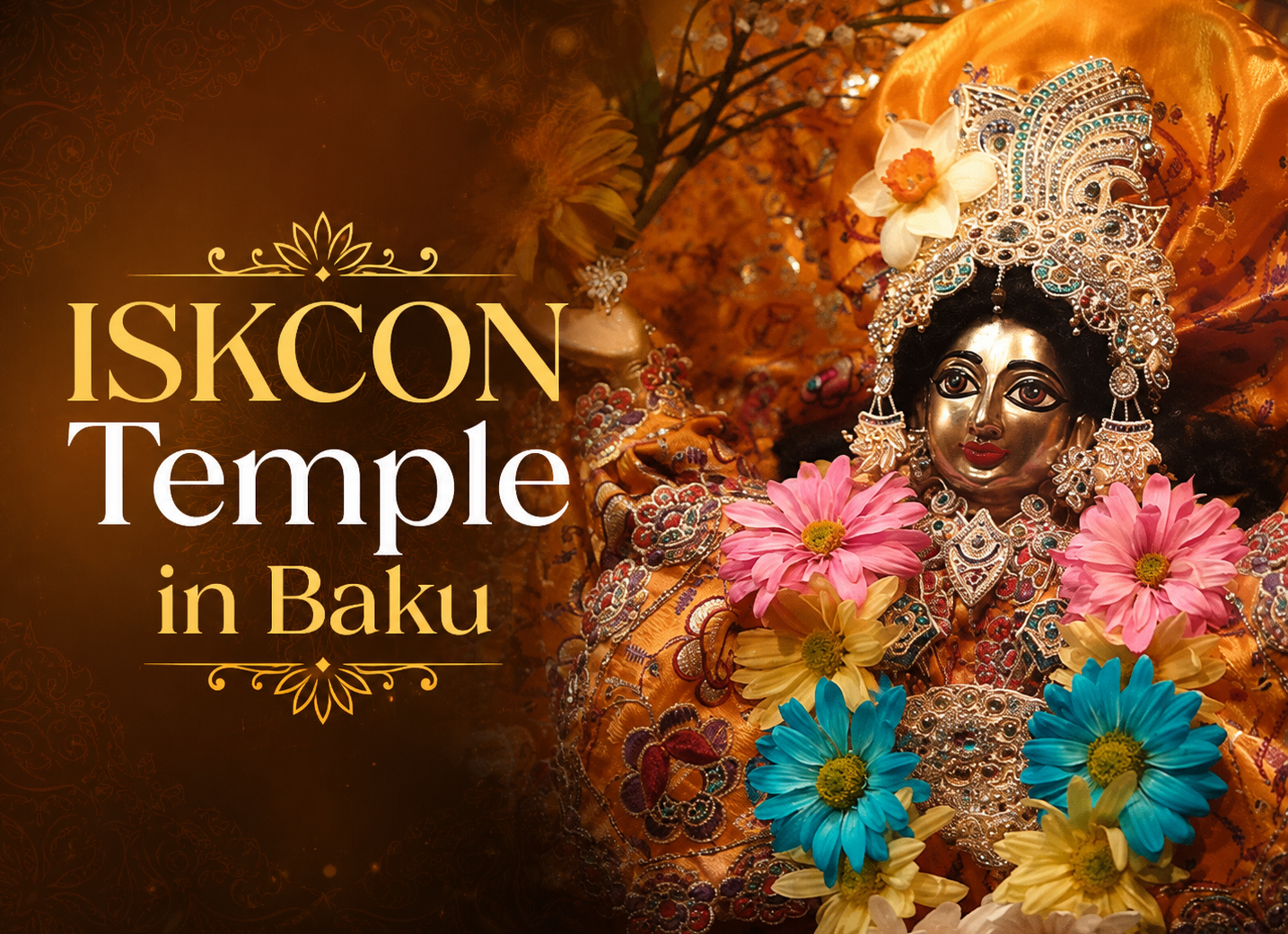
When you think of Baku, the capital of Azerbaijan, your mind probably goes straight to the iconic Flame Towers, the ancient walls of Icheri Sheher, or the stunning Caspian Sea promenade. But tucked away in the Nisami District of this cosmopolitan city is a place that holds a completely different kind of magic — the ISKCON Baku temple, a Radha-Krishna temple that serves as a quiet sanctuary of devotion in the heart of the Caucasus.
For Indian travelers visiting Azerbaijan — whether for business, tourism, or transit — discovering a Hare Krishna temple in Baku can feel like finding a piece of home thousands of miles away. This blog covers everything you need to know before you visit: the history, the deities, the experience, practical details, and why this ISKCON temple in Azerbaijan deserves a spot on every Indian traveler’s itinerary.
“In a city where the ancient and ultra-modern coexist, the ISKCON Baku temple stands as a reminder that devotion has no borders.”
What Is ISKCON — And Why Does It Matter Abroad?
The International Society for Krishna Consciousness, universally known as ISKCON, was founded in New York in 1966 by A.C. Bhaktivedanta Swami Prabhupada. In just a few decades, it grew into one of the most widespread Vaishnava movements in the world, with temples, cultural centers, and farm communities spanning over 100 countries.
For Indian devotees traveling internationally, ISKCON temples are far more than tourist attractions. They are places of worship, cultural familiarity, and community — where Sanskrit shlokas, the fragrance of incense, and the warm sound of kirtan feel just like being back home. The ISKCON Baku center is one such outpost of this global spiritual network, officially listed in the worldwide ISKCON directory and serving the city’s Indian diaspora, local Azerbaijani devotees, and visiting pilgrims alike.
History and Background of the ISKCON Baku Temple
The establishment of a Hare Krishna center in Baku is itself a remarkable story. Azerbaijan, a predominantly Muslim country, has historically maintained a tradition of religious tolerance, and the ISKCON movement found fertile ground here in the post-Soviet era. The ISKCON temple in Baku has been serving the city’s devotee community since the early 2000s and is part of the broader CIS (Commonwealth of Independent States) network of ISKCON centers.
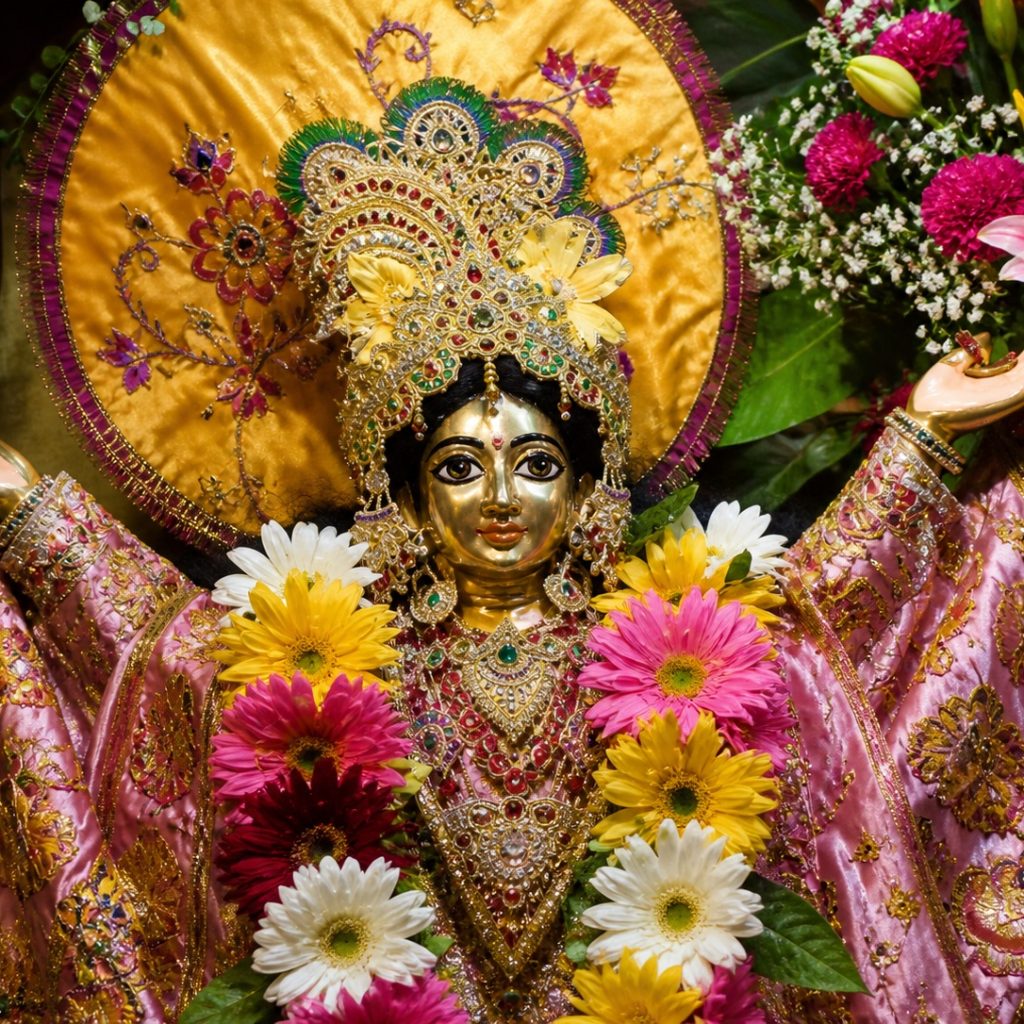
The center is officially registered at 2A Sharifli, Nisami District, Baku, Azerbaijan — AZ1002. It houses beautiful deity forms of Sri Sri Gaura Nitai (Lord Chaitanya and Nityananda), as well as images of Sri Gauranga Mahaprabhu — deities central to the Gaudiya Vaishnava tradition that ISKCON follows. The temple hall, while modest in size compared to grand ISKCON temples in India, is beautifully maintained and radiates a spiritual warmth that immediately sets it apart from the surrounding cityscape.
The Deities: Who Are Sri Sri Gaura Nitai?
Unlike the more commonly known Radha-Krishna temples found across India, the primary deities at the ISKCON Baku center are Sri Sri Gaura Nitai — the divine forms of Sri Chaitanya Mahaprabhu and Sri Nityananda Prabhu, who are revered as the most merciful avatars in Gaudiya Vaishnavism.
Sri Chaitanya Mahaprabhu, born in Bengal in 1486, initiated the Bhakti movement that emphasized sankirtana (congregational chanting) as the highest path to God realization in Kali Yuga. His companion Nityananda Prabhu was known as the embodiment of divine compassion. Together as “Gaura Nitai,” they are worshipped with great love across ISKCON centers worldwide. For devotees, simply seeing their lotus feet is considered an immense blessing — and the darshan of Gaura Nitai at the ISKCON temple in Baku carries that same grace.
What to Expect When You Visit?
Visiting any ISKCON center follows a gentle rhythm that will feel immediately familiar to anyone who has attended temple programs in India. Here is what the experience at the Hare Krishna temple in Baku typically looks like:
Kirtan and Aarti
The temple program centers around mangala-aarti (early morning worship) and the evening program. During these sessions, devotees sing kirtan — the melodic chanting of Hare Krishna, Hare Krishna, Krishna Krishna, Hare Hare — accompanied by mridanga drums and karatalas (hand cymbals). Even if you don’t speak Azeri or Russian (the main languages used for lectures here), the universal language of kirtan needs no translation.
Prasad Distribution
No ISKCON temple visit is complete without prasad — food that has been offered to the Lord before distribution. At the Baku center, prasad is typically served on Sundays after the program. For Indian vegetarians traveling in Azerbaijan, where finding pure vegetarian food can be a challenge, the temple’s prasad is both a spiritual and practical lifesaver.
Bhagavad Gita Lectures
The temple hosts regular lectures and readings from Srila Prabhupada’s books, particularly the Bhagavad Gita As It Is and Srimad Bhagavatam. While most talks at the ISKCON Baku center are conducted in Azeri or Russian, the underlying philosophy transcends language, and devotees are always happy to engage visitors in English.
A Practical Note for Visitors: If you are visiting without an Azerbaijani or Russian speaker, it is advisable to call ahead on +994 (12) 4228376 to check for an English-speaking devotee on-site. Prayers and kirtans are performed in Sanskrit, so those elements are universally accessible regardless of language.
How to Reach the ISKCON Temple in Baku?
Getting to the Radha-Krishna temple in Baku is straightforward, even for first-time visitors to the city:
BY METRO: Take the Baku Metro to Qara Qarayev station. The temple is within walking distance or a short taxi ride from there.
BY TAXI/RIDESHARE: Apps like Bolt are widely available in Baku. Share the address “2A Sharifli, Nisami District” with your driver.
GOOGLE MAPS: Search “ISKCON Baku” directly in Google Maps for turn-by-turn navigation from anywhere in the city.
COORDINATES: Latitude: 40.4226°N, Longitude: 49.9295°E — useful for offline maps like Maps.me.
Best Time to Visit the ISKCON Baku Temple
The single best time to visit the ISKCON Baku center is Sunday afternoon between 4:00 PM and 7:00 PM. This is when the temple comes alive with the full Sunday Love Feast program — a hallmark of ISKCON centers worldwide that includes kirtan, a Bhagavad Gita class, and a sumptuous prasad feast. The energy on Sundays is noticeably more vibrant, with a larger congregation and a more elaborate setup.
That said, the temple also observes daily morning and evening programs. If you are staying in Baku for several days and wish to attend a quieter, more meditative session, weekday evenings are a beautiful option. Special celebrations coinciding with Vaishnava festivals — such as Janmashtami, Gaura Purnima, or Nityananda Trayodashi — are particularly memorable, so it is worth checking the temple calendar if you are planning your trip around these occasions.
Why Indian Travelers Should Prioritize This Visit?
Baku is increasingly popular among Indian tourists, thanks to easy visa-on-arrival availability for Indian passport holders (subject to current regulations — always verify before travel) and its striking blend of Persian, Soviet, and modern architecture. But beyond the usual sightseeing checklist, a visit to the ISKCON templeoffers something the Flame Towers and the Old City cannot — a moment of spiritual grounding.
Cultural familiarity in an unfamiliar city. Walking into the temple and hearing the Hare Krishna mahamantra, smelling the familiar incense, and seeing the deity forms of Gaura Nitai can be profoundly comforting for Indians traveling far from home. It is one of those rare travel moments that simultaneously expands your world and brings you back to your roots.
Pure vegetarian food. Azerbaijan’s cuisine is meat-heavy, and finding genuinely pure vegetarian — let alone sattvic — food can be difficult. The Sunday prasad at the Hare Krishna center in Baku is a blessing for vegetarians and vegans who may have been struggling through the week.
Community and connection. The ISKCON network functions like a global family. Devotees across nationalities share the same philosophical foundation, making it easy to strike up conversations, get local tips, and feel immediately welcomed — even if you walk in as a stranger.
The Temple in Context: Religion and Tolerance in Azerbaijan
One of the most enriching aspects of visiting the ISKCON Baku temple is understanding it within its broader cultural setting. Azerbaijan is a secular Muslim-majority country with a long history of religious coexistence. The capital Baku is home to mosques, Orthodox Christian churches, a synagogue, and now this Vaishnava temple — a testament to the city’s cosmopolitan character.
The fact that ISKCON has maintained an active presence in Baku for over two decades speaks both to the Azerbaijani government’s policy of religious tolerance and to the genuine warmth of the local devotee community, which includes Azerbaijani nationals who have embraced the Krishna consciousness movement wholeheartedly. Visiting the temple gives Indian travelers a rare and humanizing window into how Vedic culture has taken root far beyond the Indian subcontinent.
A Spiritual Detour Worth Every Step
Whether you are a devoted Vaishnava, a curious traveler, or simply an Indian far from home looking for a familiar anchor, the ISKCON Baku temple is a destination that will stay with you long after you’ve left Azerbaijan. In a city of fire temples, ancient walls, and futuristic towers, this small but luminous center of Krishna consciousness stands as proof that devotion — like music — carries across every border. Add it to your Baku tour. You won’t regret it.
Frequently Asked Questions
No, entry to the ISKCON Baku temple is free of charge, as is the case with most ISKCON centers worldwide. Donations are always welcome and appreciated by the community.
Absolutely. ISKCON temples are universally open to all, regardless of nationality, religion, or background. You do not need to be a devotee or Hindu to attend programs or receive prasad.
While there is no strictly enforced dress code, modest and respectful attire is appreciated. Avoiding sleeveless tops or shorts when entering the temple hall shows respect for the sacred space.
No. Kirtans and prayers are in Sanskrit, which is familiar to any Indian visitor. For lectures in Azeri or Russian, calling ahead to check for an English-speaking devotee is advisable. The spirit of the programs transcends any language barrier.
The temple is located in the Nisami District at 2A Sharifli, which is reachable from the city center in approximately 20–30 minutes by metro and taxi. The nearest metro station is Qara Qarayev.
Baku has a small but growing number of Indian and vegetarian-friendly restaurants. Asking devotees at the temple for current recommendations is your best bet for the most up-to-date options near the area.

Comment (0)